What French People Actually Eat for Breakfast (Spoiler: It's Not What You Think)
Jun 07, 2026If you've ever pictured a typical French breakfast, here's probably what came to mind. A small round table on a Parisian balcony. A flaky golden croissant fresh from the boulangerie. A small cup of strong espresso. Maybe a glass of orange juice. Possibly a baguette with butter and jam. The morning light is perfect. The birds are singing. The croissant is somehow producing zero crumbs.
Beautiful image. Almost entirely false.
I'm French. I grew up in France. I've eaten more breakfasts in France than I can count. And I can tell you with absolute confidence: most French people do not eat croissants for breakfast. Not on a Tuesday morning. Not even on a Saturday. The croissant-on-the-balcony fantasy is a tourist invention, beautiful and persistent, but not how most of us actually start the day.
So what do French people actually eat for breakfast? Let me walk you through it.
If you're learning French and want to know exactly what level you're at, you can take my free placement test here before we dive in.
The truth about croissants
Let's get this out of the way first. Croissants are real. The French eat them. They are wonderful.
But they're a treat, not a daily habit. Most French people eat a croissant maybe once a week, usually on a weekend. Some eat them less. Plenty of French people go weeks or months without one. Buying a fresh croissant from the boulangerie every morning is a holiday behavior, not a real one.
The same goes for pain au chocolat, brioche, and the rest of the viennoiserie family. These are weekend foods, special occasion foods, "I'm running late and need to grab something on the way to work" foods. They're not the average Tuesday morning.
So what is the average Tuesday morning?
The most common French breakfast: tartines
If you walked into the kitchen of a French family at 7am on a weekday, the most likely thing you'd see is a tartine.
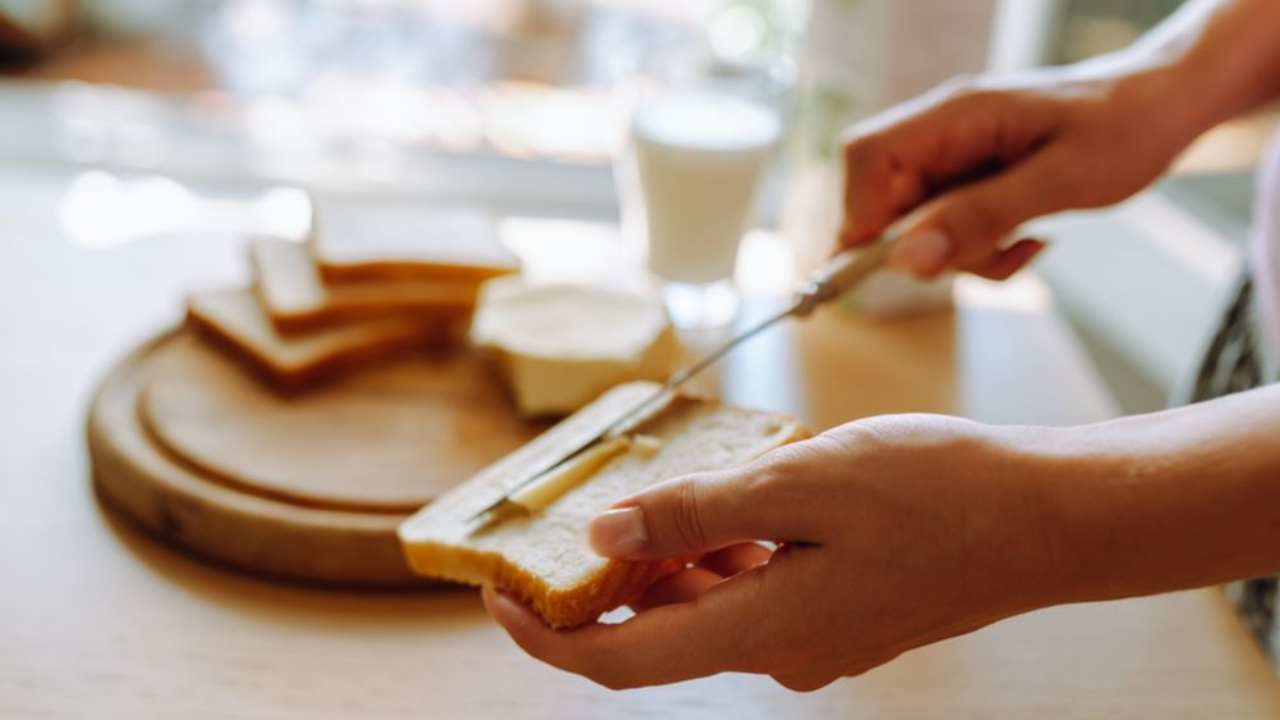
A tartine is a slice of bread (usually baguette or pain de mie), toasted or not, with butter and jam. That's it. That's the breakfast.
The bread is often left over from the day before. The butter is a little salted. The jam is something simple — strawberry, apricot, raspberry, or sometimes a more local variety like fig or quince. Some people skip the jam and just have butter. Others add honey. Others have Nutella, especially children.
The tartine gets eaten with a hot drink. Coffee, tea, or for kids, a big bowl of hot chocolate.
That's the prototypical French breakfast. Bread, butter, jam, hot drink. Simple, fast, satisfying. It's been the standard for generations and it hasn't really changed.
The classic French breakfast hot drinks
The drink matters as much as the food. A French breakfast without a hot drink isn't really a breakfast.
Le café is the most common. Often a black espresso or a small cup of strong filtered coffee. Many French adults drink it without sugar. Most don't add milk to the morning coffee unless it's specifically a café au lait (more on that in a second).
Le café au lait is coffee with hot milk, often served in a wide bowl rather than a mug. Yes, a bowl. Generations of French children have grown up dipping their tartines into a big bowl of café au lait, the way Americans might dip cookies into milk. It's still done, especially on weekends.
Le thé is also popular, especially among people who prefer something gentler. English-style black tea, herbal tisanes, or green tea. Often without milk.
Le chocolat chaud is the kid drink. Hot chocolate, often made with cocoa powder dissolved in hot milk, served in a bowl big enough to dip bread into. Many French adults still have it occasionally on cold mornings, with no shame whatsoever.
The hot drink is non-negotiable. Even a French person rushing out the door will usually pause for at least a quick coffee.
Cereal exists, but it's complicated
French people do eat cereal, but the relationship is different than in English-speaking countries.
Children eat cereal. It's marketed at them aggressively, the same brands you'd recognize (Chocapic, Frosties, Lion, Trésor) plus more local options. Most French kids will eat cereal on weekday mornings at some point during their childhood.
Adults eating cereal is less common, though it does happen. Muesli and granola have become more popular over the past twenty years, especially among health-conscious adults and younger generations. But the idea of a grown adult having a giant bowl of Cheerios as a regular breakfast is still slightly foreign to most French people.
The bigger point: French cereal portions are smaller than American ones. A French breakfast bowl of cereal might be about half what an American or British bowl looks like, eaten with cold milk, often with a hot drink on the side.
The yogurt and fruit option
For health-conscious French adults, the modern breakfast often includes:
- A yogurt (plain or fruit-flavored, usually full-fat)
- A piece of fruit (apple, banana, orange, kiwi)
- Sometimes muesli or oats
- Coffee or tea
This is closer to what younger French professionals eat now, especially in Paris. It's lighter, faster, and fits a busy modern lifestyle. But it's a relatively recent shift. Older generations still default to bread, butter, and jam.
What French people don't eat for breakfast
Let me list the things you might assume are French breakfast staples but really aren't, especially compared to other countries:
Eggs. The French eat eggs at lunch and dinner, in salads, in omelettes for an evening meal, in quiches. They do not typically eat eggs for breakfast. A French breakfast is sweet, not savory.
Bacon and sausages. Same reason. Breakfast in France is sweet. The English-style "full breakfast" with bacon, eggs, beans, and tomatoes is a curiosity to most French people.
Pancakes or waffles for breakfast. Crêpes exist (and are wonderful), but they're a snack, a dessert, or sometimes a Sunday brunch food. Not a Tuesday morning food.
Avocado toast. Yes, this has caught on in trendy Paris cafés. No, your average French person at home is not making it.
Smoothies. Younger urban French people do drink them, but they're not part of the cultural breakfast tradition.
Big coffees from chains. A French person buying a 16-oz vanilla latte from a chain on the way to work is rare. Most French coffee drinkers prefer small, strong espressos at home or standing at a café counter.
The pattern: French breakfast is small, sweet, and bread-based. The huge, savory, protein-heavy breakfast that dominates American and British food culture isn't really a French thing.
Why the French eat such a small breakfast
This surprises a lot of people, especially Americans who grew up being told that breakfast is the most important meal of the day. In France, it's almost the opposite. Breakfast is the smallest meal. Lunch is the biggest. Dinner is somewhere in between.
The logic behind it makes sense once you think about it. French lunches are traditionally substantial, often a full multi-course meal eaten slowly between noon and 2pm. If you're going to eat a real lunch in a few hours, you don't need to load up at 7am. A tartine and a coffee will tide you over just fine.
This is also why French children are often given a goûter — a small snack at around 4pm to bridge the gap between lunch and dinner. American kids snack constantly throughout the day. French kids eat structured meals plus one official snack. Different rhythm, different food culture.
If you want to read more about how French daily life differs from what you might expect, my post on what daily life in France is really like goes into more detail.
A sample French breakfast vocabulary list
If you want to talk about breakfast in French, here are the words you'll actually need:
Le petit déjeuner — Breakfast (literally "little lunch") Une tartine — A slice of bread with something on it Du pain — Bread Du beurre — Butter De la confiture — Jam Du miel — Honey Une biscotte — A dry crispbread, often eaten as an alternative to fresh bread Un croissant — A croissant Un pain au chocolat — A chocolate-filled pastry (called une chocolatine in southwestern France, and people will fight you about which name is correct) Du café — Coffee Du thé — Tea Du chocolat chaud — Hot chocolate Du jus d'orange — Orange juice Des céréales — Cereal Un yaourt — A yogurt Un fruit — A piece of fruit
If you want a bigger collection of everyday French vocabulary like this, my free ebook with 100 essential everyday French phrases is a good place to start.
What about Sunday breakfasts?
Okay, fine, I'll give you one tiny win. Sunday is the one day when the croissant fantasy is closer to reality.
A typical French Sunday morning might look like this. Someone in the household goes to the local boulangerie around 8 or 9am. They pick up a fresh baguette and a few viennoiseries — maybe two croissants, a pain au chocolat, a brioche. They bring everything home. The family eats slowly, drinks coffee, reads the paper or talks. Sundays in France are made for this kind of slow, simple pleasure.
So if you've come to France imagining the croissant breakfast, you'll get it. Just not on a Tuesday.
The takeaway
The French don't eat the way the marketing makes you think. Breakfast in France is small, simple, sweet, and bread-based. Most days it's a tartine and a coffee. Some days it's cereal. On Sundays, it might be a croissant. And almost never, in any version, is it eggs and bacon.
If you're traveling to France soon and want to eat like a local, lean into this. Skip the hotel buffet with its scrambled eggs. Walk to the corner boulangerie. Buy a baguette. Bring it back to wherever you're staying. Spread butter and jam on a slice. Make a coffee. Sit by a window for ten minutes.
That's the real French breakfast. It's not glamorous. It doesn't photograph as well as a perfect croissant. But it's how the French actually eat, and it's quietly one of the nicest ways to start a day.
If you want to learn the kind of French that lets you have real conversations about real things — including walking into a boulangerie and ordering breakfast like a local — you can try a free sample lesson from my course here and see if my approach is a good fit.
À très vite, Clémence