30 Essential French Phrases for Your First Trip to France
May 24, 2026You've booked the trip. The flights are paid for, the Airbnb is reserved, your itinerary is full of cafés and museums and that one bakery in Montmartre everyone keeps posting about on Instagram.
And now you're starting to panic a little. Because your French is, let's say, modest. You took it in high school. You've been doing Duolingo for a few months. You know "bonjour" and "merci" and how to count to ten if you concentrate.
Here's the truth: you don't need to be fluent to have a great trip in France. You just need a small handful of phrases used at the right moments. Native speakers will warm up to you immediately the second they hear you make an effort, even if your accent is wobbly and your grammar is wrong.
So here are the 30 phrases I'd put in your back pocket before your first trip. They're simple, they're polite, they cover the situations you'll actually encounter, and they'll transform your experience of France.
If you want to know exactly what level you're at before your trip, you can take my free placement test here to see where you stand.
The five phrases that matter most
Before we get into specifics, learn these five. Even if you only memorize this section and forget the rest of the post, you'll be okay.
1. Bonjour. — Hello / Good day.
This is the most important word in the French language. I'm not exaggerating. In France, you say "bonjour" before anything else. Before asking a question. Before ordering. Before entering a small shop. Skipping it is the fastest way to come across as rude, and it's the single biggest mistake tourists make. Say "bonjour" first. Always.
2. Excusez-moi. — Excuse me.
For getting attention, asking a question, or squeezing past someone on the metro. Polite, useful, works in every situation.
3. S'il vous plaît. — Please.
Add it to almost any request and you'll sound polite. "Un café, s'il vous plaît." "L'addition, s'il vous plaît."
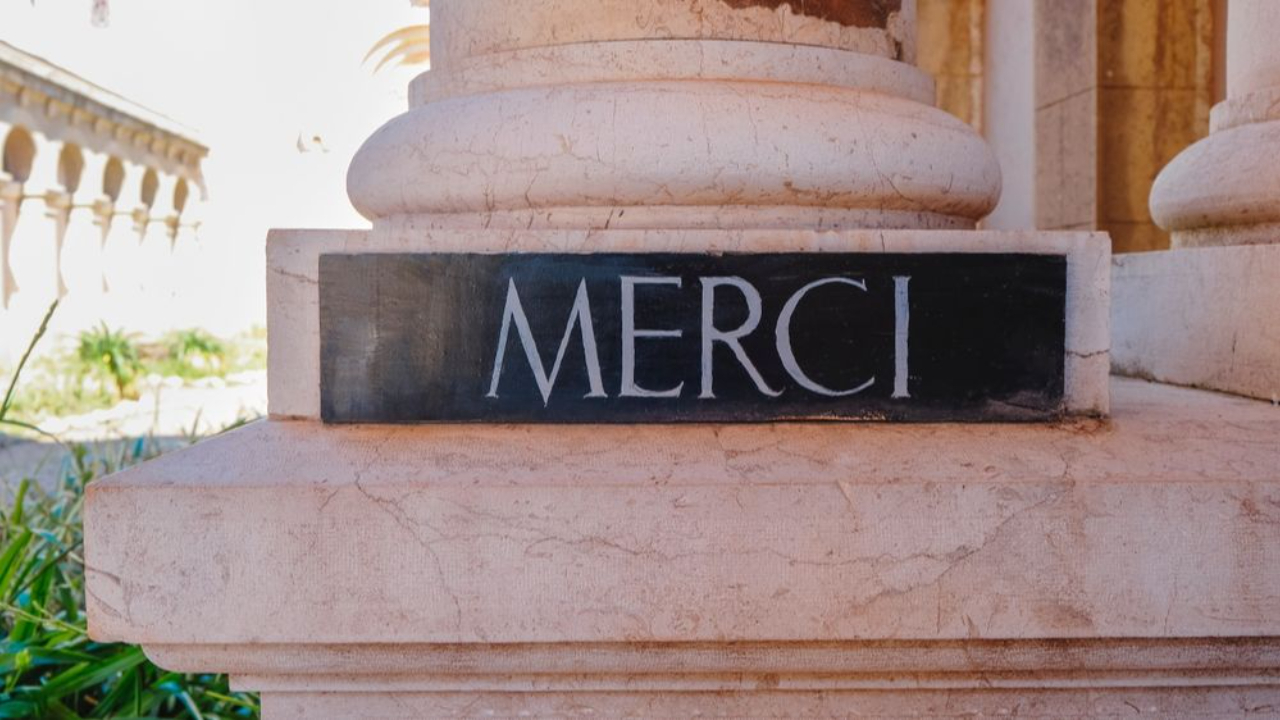
4. Merci. — Thank you.
Use generously. You can also say "merci beaucoup" (thank you very much) or "merci infiniment" (thank you so much) for extra warmth.
5. Au revoir. — Goodbye.
Say it on your way out of any shop, café, or interaction. The French notice when you don't.
Greetings and small talk
6. Bonsoir. — Good evening.
Use this instead of "bonjour" after roughly 6pm. Restaurants, shops still open in the evening, taxi drivers — anyone you greet after dark.
7. Comment allez-vous ? — How are you? (formal)
The polite version, used with strangers, older people, and in professional contexts.
8. Ça va ? — How's it going? (informal)
Casual. Use with people you've already chatted with, or in casual contexts. The reply is also "ça va" or "ça va bien."
9. Très bien, merci. Et vous ? — Very well, thanks. And you?
The standard polite response when someone asks how you are.
10. Enchanté(e). — Nice to meet you.
Use when you're introduced to someone new. If you're female, technically you'd say "enchantée" (silent "e" at the end), but it sounds the same.
At a café or restaurant
This is where most of your French will get used. The good news: ordering food is one of the easiest interactions to nail.
11. Une table pour deux, s'il vous plaît. — A table for two, please.
Swap "deux" for whatever number you need (un, deux, trois, quatre, cinq...).
12. La carte, s'il vous plaît. — The menu, please.
In France, "le menu" actually means a fixed-price meal. The list of options is "la carte." This is one of those small mistakes tourists make all the time.
13. Je voudrais... — I'd like...
The polite way to order. "Je voudrais un café." "Je voudrais le steak frites." Much better than "Je veux" (I want), which sounds blunt to French ears.
14. Qu'est-ce que vous recommandez ? — What do you recommend?
A magic question. French servers and shopkeepers love when you ask this, and they'll often give you their honest favorite. Use it shamelessly.
15. C'était délicieux. — That was delicious.
Say this at the end of your meal. It's a small compliment that goes a long way, especially in smaller restaurants where the chef is right there.
16. L'addition, s'il vous plaît. — The check, please.
In France, the bill doesn't come automatically. You have to ask for it. You can also catch the server's eye and make a small writing gesture, but the phrase is more polite.
17. Je peux payer par carte ? — Can I pay by card?
Most French places accept cards now, but smaller cafés and bakeries sometimes don't, especially for small amounts. Better to ask.
Shopping and money
18. Je regarde, merci. — I'm just looking, thanks.
When a shop assistant approaches you, this is the polite way to say you're browsing.
19. C'est combien ? — How much is it?
Simple, direct, works in any shop or market.
20. C'est trop cher. — It's too expensive.
Useful at markets where you might haggle a little, or just for your own commentary when you see a €15 sandwich.
21. Vous acceptez les cartes ? — Do you accept cards?
Same as the restaurant version, but for shops and markets.
22. Je prends ça. — I'll take this.
Point at what you want, say the phrase. Done.
Getting around
23. Où est... ? — Where is...?
Follow it with whatever you're looking for. "Où est la station de métro ?" "Où est la Tour Eiffel ?" "Où est les toilettes ?"
24. Je suis perdu(e). — I'm lost.
When you're genuinely lost (which will happen). Add "Pouvez-vous m'aider ?" (Can you help me?) for extra warmth.
25. C'est loin ? — Is it far?
A useful follow-up when someone is giving you directions. Often the answer is "non, c'est tout près" (no, it's very close) or "oui, c'est mieux de prendre le métro" (yes, better to take the metro).
26. À quelle heure... — What time...
Followed by "...ouvre le musée ?" (does the museum open?) or "...ferme la boulangerie ?" (does the bakery close?). Time-sensitive questions are common as a tourist.
When things go wrong (or you don't understand)
This is the section most beginner phrasebooks skip, and it's the most useful one.
27. Je ne parle pas bien français. — I don't speak French well.
This phrase is a magic key. The second you say it, French people relax. They realize they're dealing with a foreigner who's trying, and most will switch into helping mode. Some will even try their English. Either way, the energy of the conversation softens.
28. Pouvez-vous répéter, s'il vous plaît ? — Can you repeat, please?
Use this when someone speaks too fast and you didn't catch what they said. "Plus lentement, s'il vous plaît" (more slowly, please) is also useful.
29. Je ne comprends pas. — I don't understand.
When you genuinely don't get what's being said. Combine with phrase 27 for maximum effect.
30. Désolé(e). — Sorry.
For bumping into someone, asking for a favor, or anytime you need to apologize. The "(e)" at the end is silent but makes the spelling correct if you're female. The pronunciation is the same either way.
A few extra tips that will change your trip
Always start with bonjour. I know I said this already. I'm saying it again because it's that important. Walk into a bakery? Bonjour. Walk up to a stranger to ask a question? Bonjour first, then your question. Get into a taxi? Bonjour. The French don't see this as optional politeness. It's the basic code of acknowledging that another human exists. Skip it and you'll get cold treatment everywhere you go.
Try French even if it's bad. The myth that French people get angry when you butcher their language is mostly that — a myth. What French people actually dislike is when foreigners march up speaking English without even attempting "bonjour, parlez-vous anglais ?" Make the effort, and you'll see how warm and helpful French people can be.
Learn the polite forms first. As a tourist, you'll be using "vous" with almost everyone you meet (servers, shopkeepers, strangers). Save "tu" for if you make a French friend who invites you to use it.
Carry small change. Many cafés, bakeries, and small shops still don't take cards for small purchases. Have a few euros in coins on hand.
Don't expect everyone to speak English. In Paris, most people in tourist-facing jobs speak some English. Outside Paris, much less so. The phrases in this post will save you in those moments.
If you want to dive deeper into how French people actually start and end conversations, my post on how French people really start and end conversations walks through the small social rituals that textbooks always miss. And if you want a bigger collection of phrases to take with you, my free ebook with 100 essential everyday French phrases is a perfect travel companion.
Bon voyage
Here's what I want you to remember. You don't need perfect French to have an amazing trip in France. You just need to make the effort, lead with politeness, and treat every interaction as a small chance to connect.
The French are not the cold people the stereotype suggests. They're warm, curious, and generous, especially with travelers who treat their language and culture with respect. The phrases in this post are your invitation into that warmer France.
Print this list. Save it on your phone. Practice the five most important ones until they feel natural, and the rest will come more easily once you're there.
If you want to learn the kind of French that will let you go beyond survival phrases and actually have real conversations on your trip, you can try a free sample lesson from my course here and see if my approach fits how you learn.
Bon voyage, et à très vite, Clémence